

 24 Hours



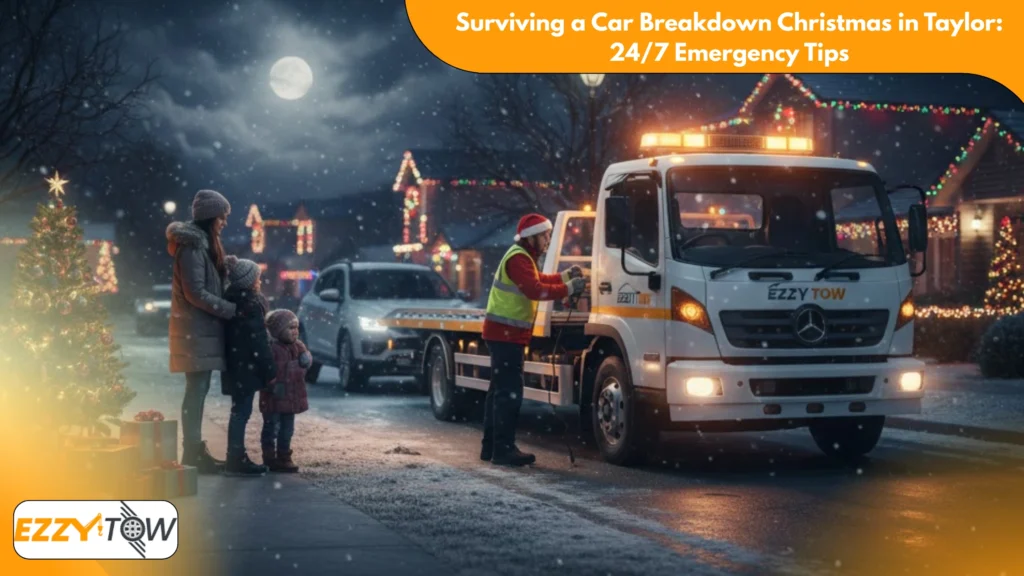
A car breakdown Christmas moment can turn a joyful holiday drive into a stressful situation, especially with Taylor’s freezing winter temperatures and packed holiday roads.
According to AAA data, roadside assistance providers responded to more than 860,000 emergency calls over the 2024 year-end holiday period, helping drivers stranded with dead batteries, flat tyres, and fuel issues, highlighting how common breakdowns become during Christmas travel.
Below is a complete guide to help you stay safe, prepared, and confident while driving around Taylor during the Christmas period.
Why Christmas Breakdowns in Taylor Are More Stressful and Risky
Cold weather, limited workshops, and heavy holiday travel make Christmas breakdowns more difficult to handle.
Many families rush to gatherings, elderly passengers struggle with freezing conditions, and parents worry about kids waiting in the cold.
Reduced mechanic hours during the holidays mean delays, and many drivers face increased waiting times for roadside assistance service help.
Essential Vehicle Checklist Before Traveling for Christmas in Taylor
Below are the key checks every Taylor driver should complete to avoid facing another car breakdown Christmas situation.
- Test the battery and replace it if it’s over five years old.
- Check tyre pressure and tread depth; consider winter tyres if needed.
- Top up coolant, oil, brake fluid, and washer fluid.
- Make sure wipers are working and all lights are bright.
- Inspect belts, hoses, and brakes for any signs of wear.
- Keep your fuel tank at least one-quarter full to prevent issues in winter traffic.
Prepare Your Car for Breakdown Season: Winter Readiness Guide
Here are the essential steps to prepare your vehicle for Michigan’s colder months and reduce the chance of unexpected issues:
- Schedule a winter tune-up to fix minor problems early.
- Use winter tyres for better grip on icy roads.
- Test your heating and defrosting systems for proper warmth.
- Check the exhaust system for any blockages.
- Pay attention to warning lights and address them immediately.
Winter Emergency Kit Every Taylor Driver Should Carry
Below are the must-have tools that your winter emergency kit should include to keep you safe during a breakdown:
- Blankets, gloves, hats, and hand warmers
- High-visibility vest and warning triangle
- Sand or kitty litter for traction
- Flashlight, power bank, jumper cables
- First-aid kit
- Ice scraper, small shovel, tyre inflator
- Snacks, water, and small items for kids or elderly passengers
How to Get Help Fast in Taylor on Christmas Day
Holiday breakdowns can feel overwhelming, especially when mechanics are closed or response times are slow.
EzzyTow provides reliable holiday support, whether you need Holiday towing service Taylor or quick help anywhere across the community.
If you ever need immediate assistance, you can call 02489202220, visit 67 Kennerde Cres, Taylor, or email info.Ezzytow@gmail.com for friendly holiday help.
This is also the safest time to keep a list of trusted local contacts saved on your phone, especially when travelling with family in cold weather.
What To Do If Your Car Breaks Down on a Highway During Winter
Here are the steps to follow when your car fails in the cold while driving:
- Move your vehicle safely off the road.
- Turn on hazard lights to stay visible.
- Stay inside the car unless the situation is dangerous.
- Conserve warmth by using blankets and wearing layers.
- Keep your seatbelt on while waiting for help.
- Clear snow from the exhaust to prevent fumes.
- Contact help immediately this is where services like 24/7 emergency towing Christmas become essential.
Tips to Manage a Roadside Breakdown in Severe Cold
Below are practical steps to stay calm and safe when you’re stranded in freezing temperatures:
- Keep your phone battery preserved and use a power bank if needed.
- Use your emergency kit to stay warm and visible.
- Run the engine occasionally for heat, but ensure exhaust is clear.
- Avoid walking along icy roads or dark highways.
- Inform family or friends of your exact location.
- If the issue is the battery, a local Battery jump start service near me can help you get back on the road quickly.
What To Do After Your Car Is Recovered
Once your vehicle has been towed or inspected, these steps will help you resume your plans smoothly:
- Document the issue and ask for a clear explanation from the technician.
- Plan repairs after Christmas when more shops reopen.
- Check if your insurance covers towing or repair reimbursement.
- Monitor your car for warning signs in the following days.
- If the problem persists, reaching out to a Christmas Day mechanic may help with temporary fixes.
Conclusion
A car breakdown Christmas moment can be challenging, especially with cold weather and holiday closures.
But with the right preparation, safety steps, and quick access to trusted local support, you can handle winter breakdowns confidently.
If you ever need help during the holidays, you can reach EzzyTow anytime at 02489202220 or email info.Ezzytow@gmail.com for immediate support.
Frequently Answered Questions (FAQs)
What do you do if you have a car breakdown?
Move your vehicle to a safe spot and turn on hazard lights. Stay warm inside the car and call a towing service or roadside help. Keep your emergency essentials nearby until assistance arrives.
What should you do if your first vehicle has broken down?
Stay calm and ensure everyone is safe. Contact professional assistance and wait in a warm, visible spot. Use blankets and lights if the weather is cold.
What to do if a car breaks down without service?
Use your emergency kit and stay inside your vehicle. Call a local towing provider directly. Inform a family member or friend about your location for extra safety.
What to do if my car breaks down and I have no money?
Check whether your insurance includes roadside help or towing reimbursement. Some providers offer flexible options or affordable solutions. Stay safe while waiting for help to arrive.
Should I stay in my car if it breaks down?
In winter, staying inside is usually the safest option due to freezing temperatures. Keep hazard lights on and stay buckled. Exit only if the situation outside is more dangerous.

