

 24 Hours



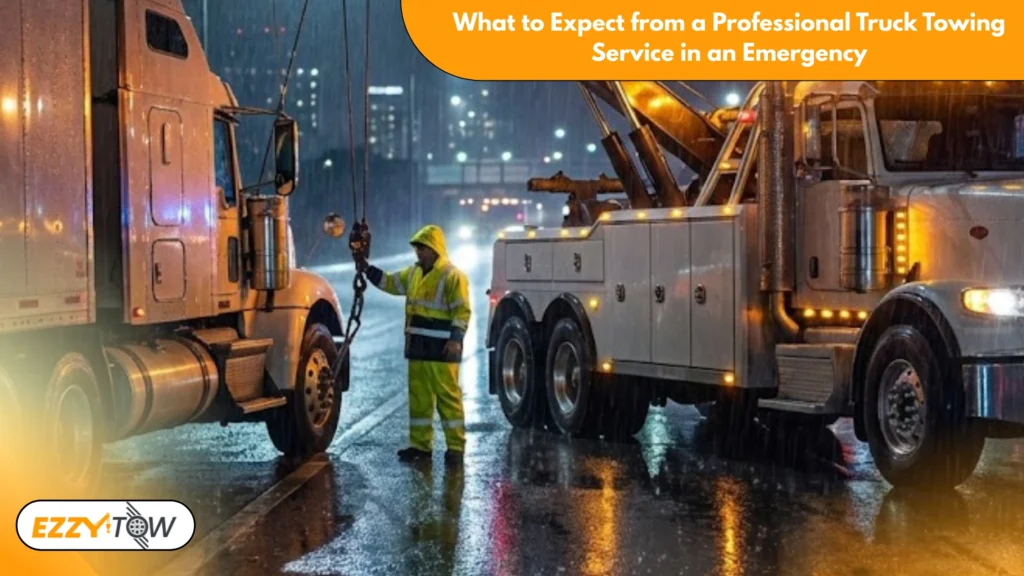
A professional truck towing service in Australia generally starts from about $250–$400 for an emergency call-out, with higher pricing when long distances, heavy vehicles, or recovery work are involved. EzzyTow handles emergency towing and recovery with the right equipment, trained operators, and a focus on safe vehicle handling from the roadside through to delivery.
In this guide you will find how emergency truck towing works in Australia, the main tow and recovery units used, the factors that affect price, and how the towing process is usually carried out on the road.
What To Expect From A Professional Truck Towing Service
Here is how emergency truck towing is normally handled in Australia once the job is confirmed.
Step 1: Job Details Confirmed
The operator confirms the vehicle type, weight, exact location, and condition. Access issues like narrow entries, soft ground, or low clearance are noted. This ensures the correct towing or recovery unit is assigned before departure.
Step 2: Tow Unit Assigned
Based on the information provided, the dispatcher selects the right truck such as tilt tray, heavy recovery, or integrated towing. This prevents delays caused by unsuitable equipment arriving on site.
Step 3: Arrival Time Provided
You receive an estimated arrival window and ongoing communication if timing changes. This keeps expectations clear and avoids uncertainty during the wait.
Step 4: Site Assessed On Arrival
The operator reviews positioning, loading angles, and surrounding vehicle movement. This assessment determines the safest way to attach and move the truck without causing secondary damage.
Step 5: Vehicle Secured For Loading
Wheel blocks, rigging, or winch points are applied depending on the setup. The goal is to stabilise the truck before any movement so loading remains controlled from the first pull to the last.
Step 6: Truck Loaded Or Recovered
The vehicle is carefully lifted or winched into place. Adjustments may be made mid-process to manage angles, clearance, or weight transfer. Precision here prevents structural strain or component stress.
Step 7: Destination Confirmed
Before departure, the drop-off point is locked in and documented. This could be a workshop, yard, dealership, holding facility, or nominated business address.
Step 8: Transport Carried Out
The truck is transported using approved restraint systems matched to its weight and configuration. Routes are selected to avoid unsuitable gradients, low bridges, or poor road surfaces.
Step 9: Delivery And Unloading
The vehicle is unloaded under controlled conditions. Positioning is managed carefully to avoid scraping, shifting, or sudden movement during release.
Step 10: Final Documentation Completed
Receipts, job details, and any required notes are provided for records or insurance. This creates a clear paper trail for the recovery and transport.
Need Emergency Help Right Now?
If your truck has broken down, been damaged, or requires urgent recovery, professional towing support is available when you need it.
Call EzzyTow now at 02 489 202 220 for immediate support. You can also visit us at 67 Kennerde Cres, Taylor or email info.ezzytow@gmail.com.
What Affects The Cost Of Truck Towing In Australia
Below is a practical guide to how pricing is usually calculated for truck towing and recovery across Australia. These are typical industry ranges, not fixed quotes.
| Cost Factor | Typical Price Range (AUD) | What This Usually Means |
| Base Emergency Call-Out | $250 – $400 | Standard urgent attendance fee for trucks, depending on location and time. |
| Distance Travelled | $5 – $12 per km | Additional towing distance increases total pricing. |
| Vehicle Weight & Size | $100 – $600 | Larger and heavier trucks require specialised towing units. |
| Access Difficulty | $150 – $1,500 | Soft ground, tight entries, or awkward positioning add setup time. |
| Time & Urgency | $100 – $300 | Night work, weekends, and public holidays typically cost more. |
| Recovery Complexity | $300 – $5,000 | Winching, off-road retrieval, and rollover recovery require technical work. |
Insurance And Payment Responsibilities
Payment for towing and recovery does not always come from the same place. In many cases the transport cost is paid directly by the vehicle owner or fleet operator at the time of towing, and then later claimed back through insurance where cover applies.
Policies differ, but accident recovery, roadside towing after mechanical failure, and storage are sometimes included, provided the incident meets the conditions of the policy. Clear job records and invoices are normally supplied so the cost can be submitted to an insurer or business accounts team without confusion.
Tow Trucks and Recovery Units Commonly Used in Australia
Here are some of the specialist vehicles used to manage towing and recovery safely:
Light duty units
These trucks manage lighter vehicles and smaller loads. They are suited to urban and suburban operations. EzzyTow ensures the correct unit is matched to the task.
Tilt tray carriers
Tilt tray vehicles transport trucks with all wheels stationary. This protects drivetrains and vehicle stability during loading. The platform design supports secure transport.
Heavy recovery trucks
These units manage large commercial vehicles and complex incidents. They are built to handle high weight and difficult recovery angles. Technical lifting systems assist controlled movement.
Specialist recovery vehicles
Challenging terrain or limited access sometimes requires a vehicle recovery truck. These units support careful winching and repositioning. They help manage unstable or awkward recovery conditions.
Services Commonly Provided by Professional Truck Towing Providers
Below are services normally available through professional towing:
Emergency Breakdown Towing
Emergency breakdown towing applies when a truck cannot continue due to a mechanical or electrical fault. The tow operator arranges suitable transport based on the vehicle’s size, weight, and access conditions.
Heavy Vehicle Transport
Heavy vehicle transport supports larger commercial trucks that require purpose-built towing or carrying units. The towing provider plans the move around gross weight, axle configuration, and route restrictions.
Accident And Rollover Recovery
Accident and rollover recovery involves stabilising a damaged or displaced vehicle before controlled repositioning begins. Recovery operators assess weight shift, structure, and ground condition to determine the safest method.
Secure Long Distance Towing
Secure long distance towing manages vehicle transport between towns, regions, or states when workshop access is not nearby. The towing provider plans the route around gradients, clearance limits, and rest requirements.
Winching And Recovery Assistance
Winching and recovery assistance supports vehicles that are stuck, angled, or unable to be moved normally. Recovery operators establish anchor points, line force, and ground stability before starting the pull.
Safe Loading And Unloading Procedures
Safe loading and unloading procedures match the method to the vehicle’s design, wheelbase, and chassis clearance. Operators monitor angles, wheel position, and tension to maintain controlled movement. The same level of care applies during unloading so the vehicle is released without unnecessary strain.
When A Wrecker Truck Is Required
Here are the main situations where a specialised recovery unit is used instead of a standard tow truck:
Structural Damage
A wrecker unit is used when the vehicle has sustained body or frame damage that prevents normal loading. Recovery operators select lifting points that avoid twisting or stressing the chassis during movement. Controlled handling reduces the risk of further structural impact.
Off-Position Vehicles
Recovery work is required when a truck has rotated, jack-knifed, dropped a wheel, or left the traffic lane. The operator repositions the vehicle gradually to avoid sudden weight transfer. Precision matters more than speed in these recoveries.
Limited Access Or Difficult Terrain
Narrow work zones, soft verges, uneven surfaces, or confined industrial yards may require recovery equipment rather than a standard tow. Planning focuses on stability, clearance, and secure anchor positioning. Each movement is tested before the next stage begins.
Rollover Or High-Risk Recovery
Rollover incidents and severe damage require stabilisation before lifting or repositioning occurs. Recovery teams assess weight shift, structure, and surrounding hazards before committing to a method. The work is carried out in controlled stages to manage risk.
In situations like these, a wrecker truck near me is not simply for towing. The role of the vehicle is to stabilise, reposition, and safely recover the truck before transport.
Conclusion
When incidents occur on Australian roads, steady and experienced assistance helps keep the situation calm and controlled.
A reliable truck towing service provides trained operators, suitable equipment, and structured procedures to ensure vehicles are managed correctly during towing and recovery. EzzyTow remains committed to safe, professional support wherever help is needed.
Call EzzyTow now at 02 489 202 220 for immediate support. You can also visit us at 67 Kennerde Cres, Taylor or email info.ezzytow@gmail.com.
Frequently Answered Questions (FAQs)
-
Do towing operators handle heavy vehicles?
Yes, towing professionals use heavy duty equipment specifically designed for trucks and commercial vehicles.
-
Is emergency towing available after hours?
Most professional towing companies operate 24 hours so help remains available whenever a breakdown occurs.
-
What is the difference between towing and recovery?
Towing relocates a vehicle, while recovery involves safely removing it from an unsafe or difficult position.
-
Can towing damage a truck?
When correct equipment and loading procedures are used, towing is designed to keep the vehicle protected.
-
How far can a vehicle be towed?
Tow operators can arrange both local and long distance transport depending on the situation and requirements.

